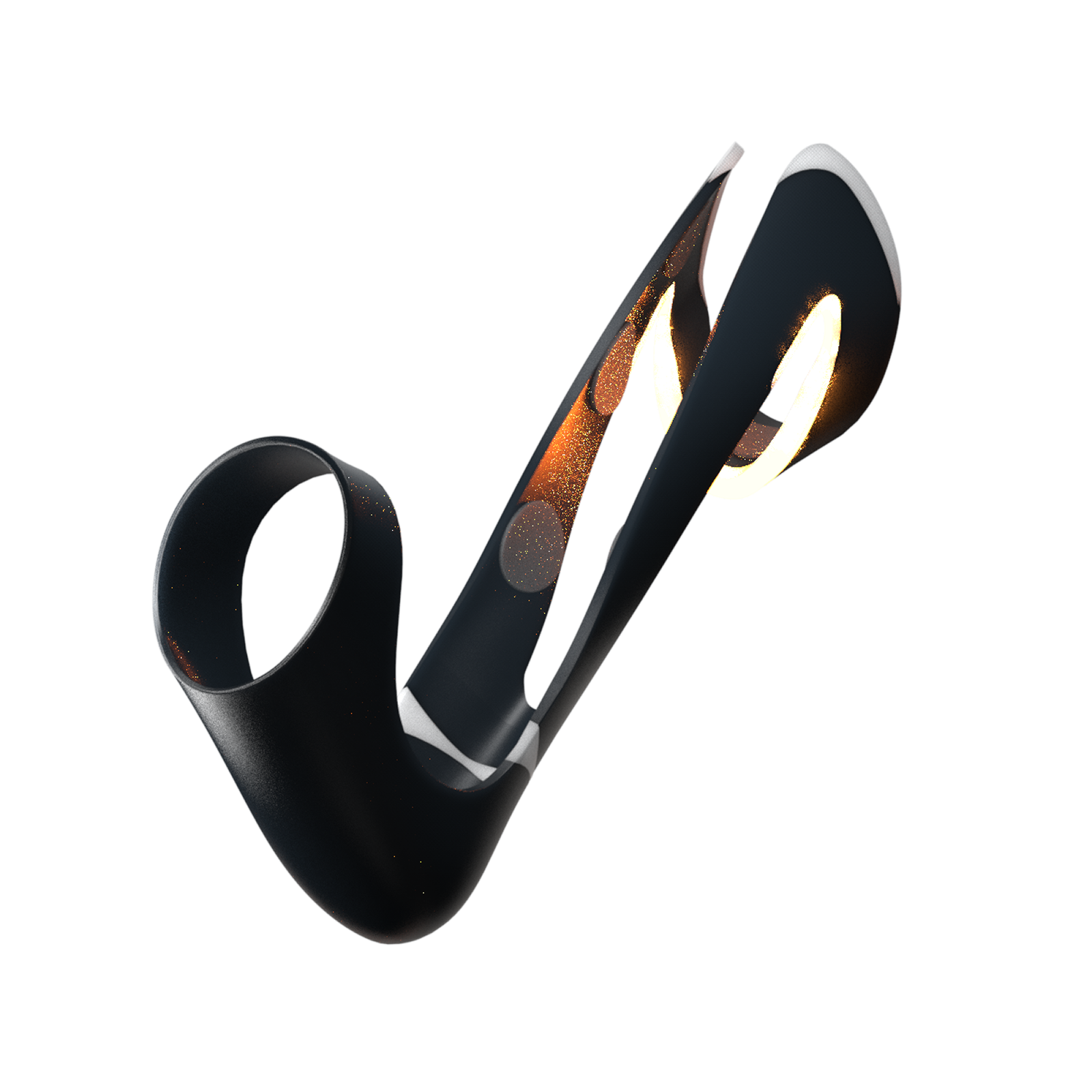
A school project that became a real startup
SENZ was a school project that developed into a technology-based start-up when it was chosen for the TechXcelerate pre-incubator program. This gave me the opportunity to develop my first product from a true business perspective, learning skills like market analysis, financial planning, and pitching to investors, alongside the design and UX work I already knew.
SENZ has participated in multiple design competitions including the Dyson Awards and Diseña México, where it was chosen as a finalist. We were also granted Best Design Project Award at Tecnológico de Monterrey Campus Guadalajara.
Responsible for advocating for user-centered design decisions throughout product development.
Responsible for reporting and managing decisions pertaining the pre-incubator program.
Current recovery technology doesn’t meet athletes where they are
Existing recovery technology does not meet the market demand for returning to your sporting passion after an injury. Athletes need accessible, effective physiotherapy tools that work with their lifestyle, not against it.
Current recovery technology does not meet the market demand for returning to your sporting passion after an injury.
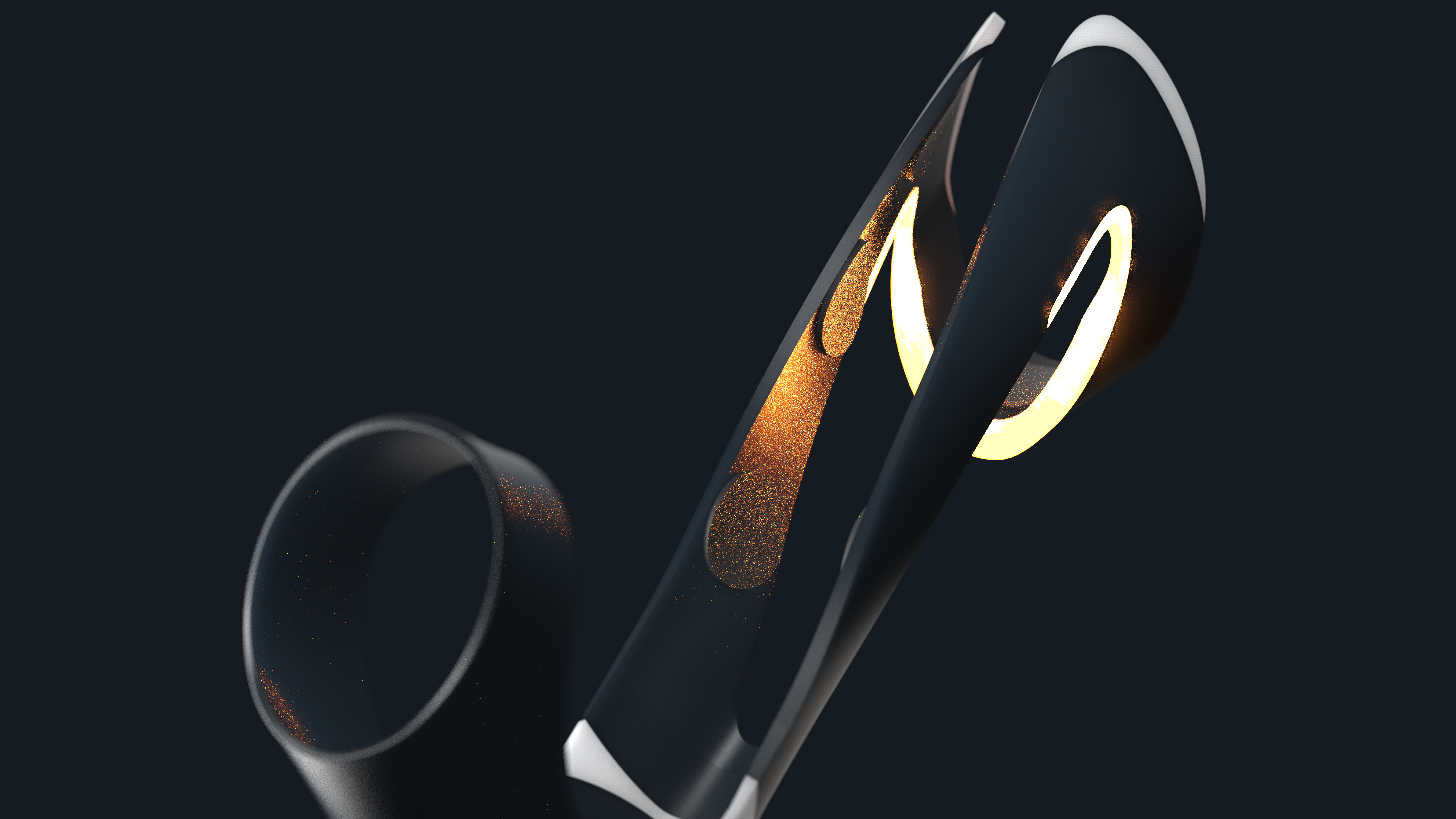
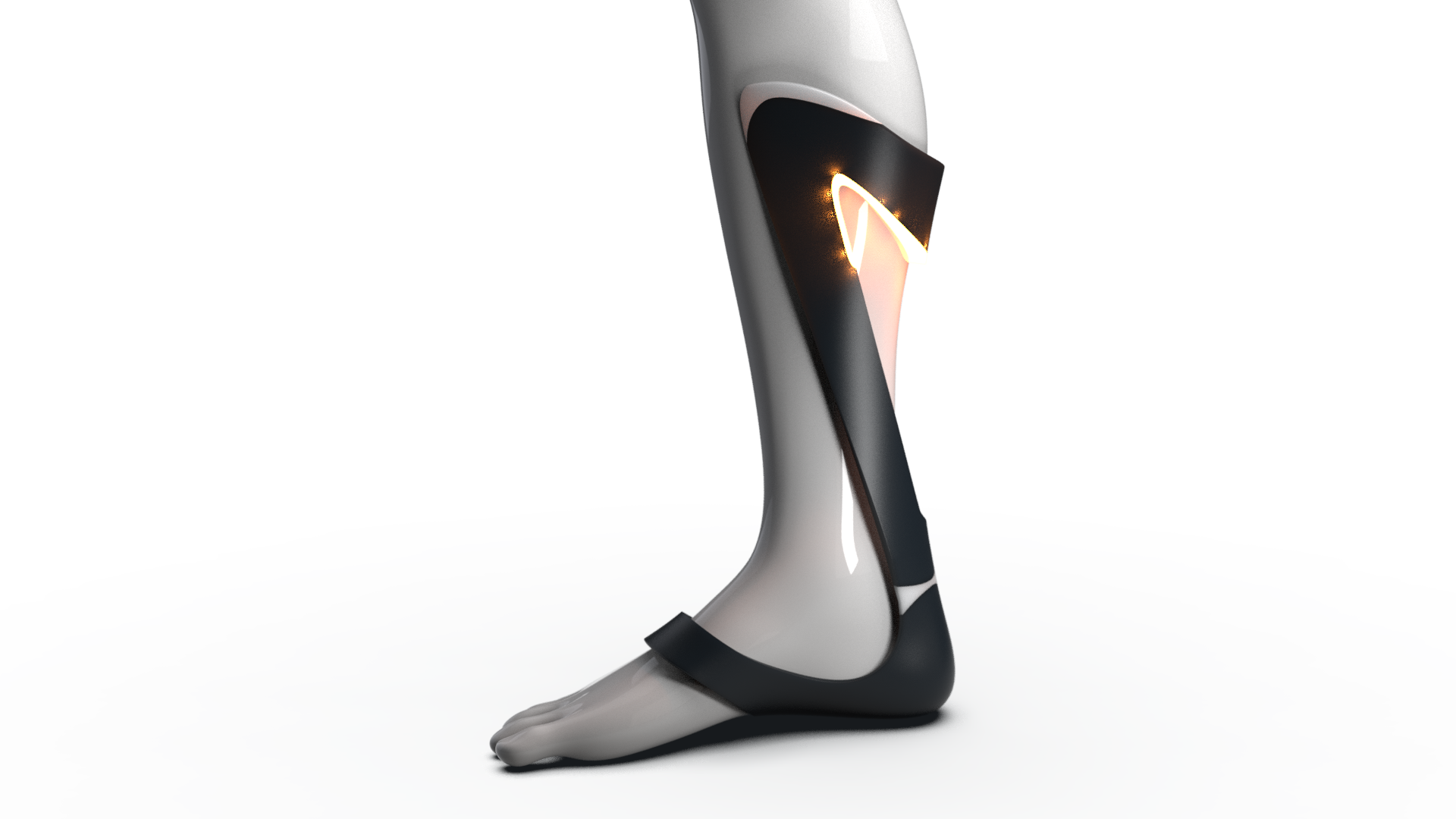
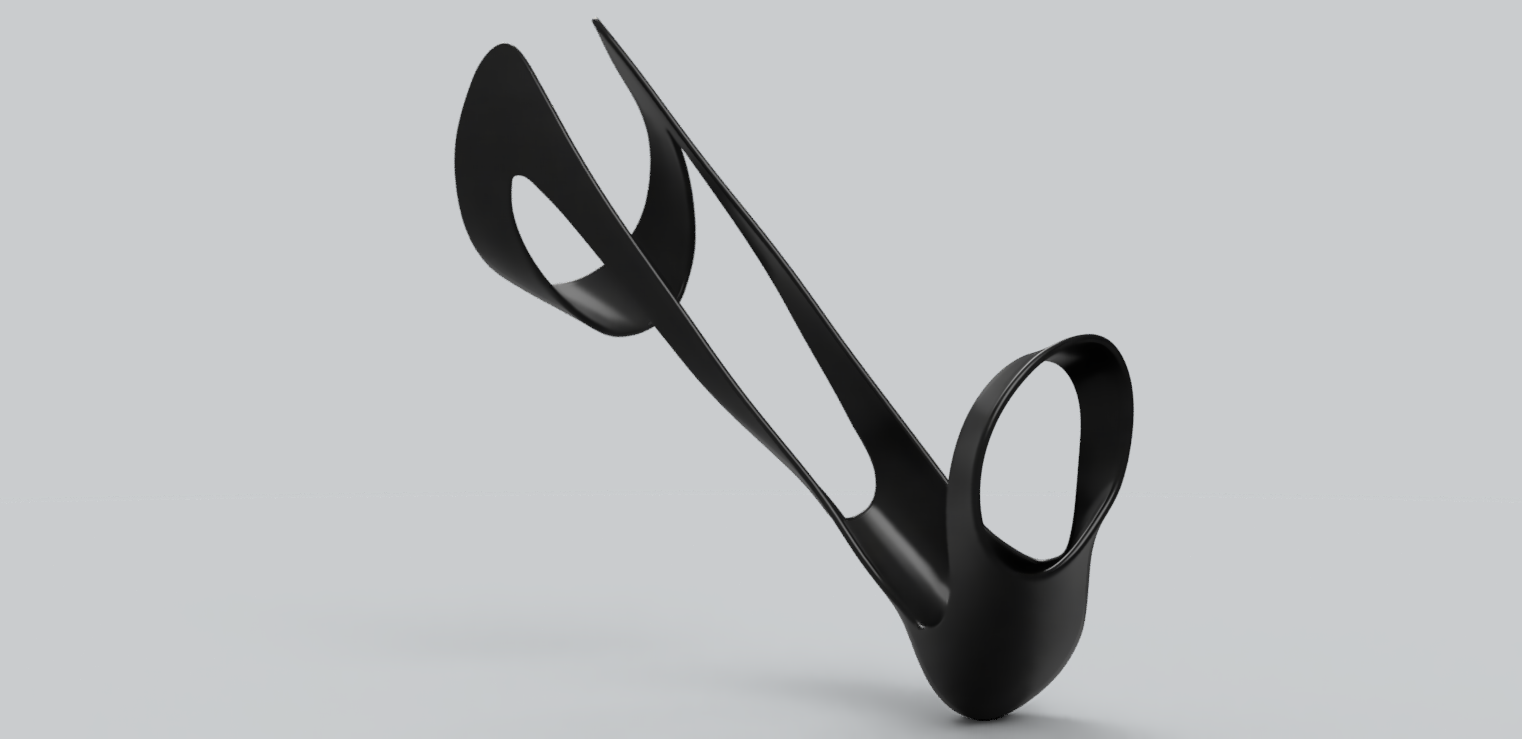
SENZ is a physiotherapy device that uses transcutaneous stimulation to promote muscle mobility for athletes and sport enthusiasts, offering a faster and more effective recovery.
Starting with the market, not the form
SENZ was initially conceived as an orthopedic device for children. However, through analysis, we discovered that the final product did not align with the market’s needs. The first step in our redesigned process was creating a Value Proposition Canvas to clearly identify and articulate the unique value our product offers.
This helped us understand the specific pain points and desires of potential new market segments. By doing so, we could tailor our marketing and development strategies to better address these needs, ultimately ensuring that SENZ would meet the demands of a more suitable market.
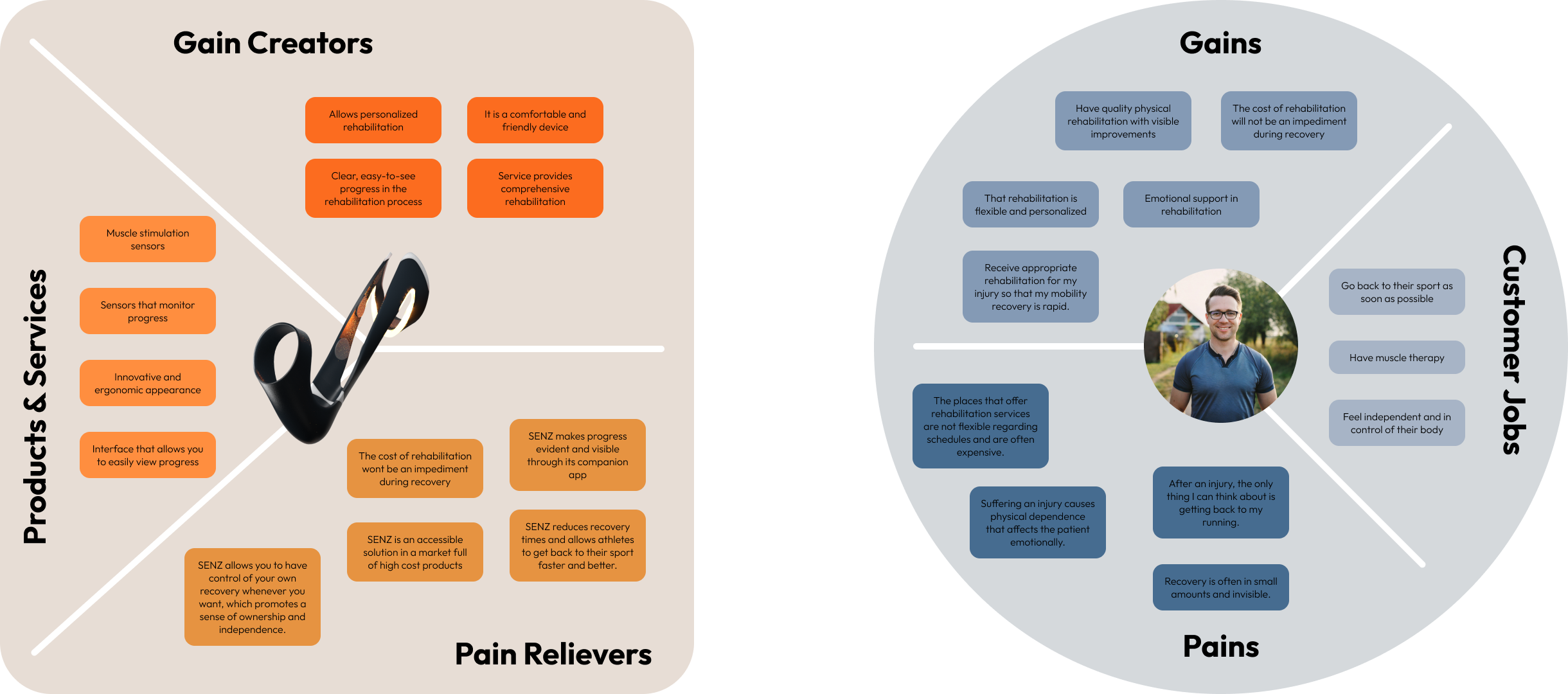
Value Proposition Canvas: identifying the right market segment
Understanding our users from the ground up
Once we identified the key attributes of the product, it was time for a market analysis to identify the best suited users. We wanted to form a deeper understanding of our users’ goals, needs, experiences, and behaviors. We created a persona for each of our user segments based on user interviews and surveys with physiotherapists, orthopedists, and business experts.
They were then updated throughout the project as we gathered more data, and used as a reference in further steps of the product and business model development.
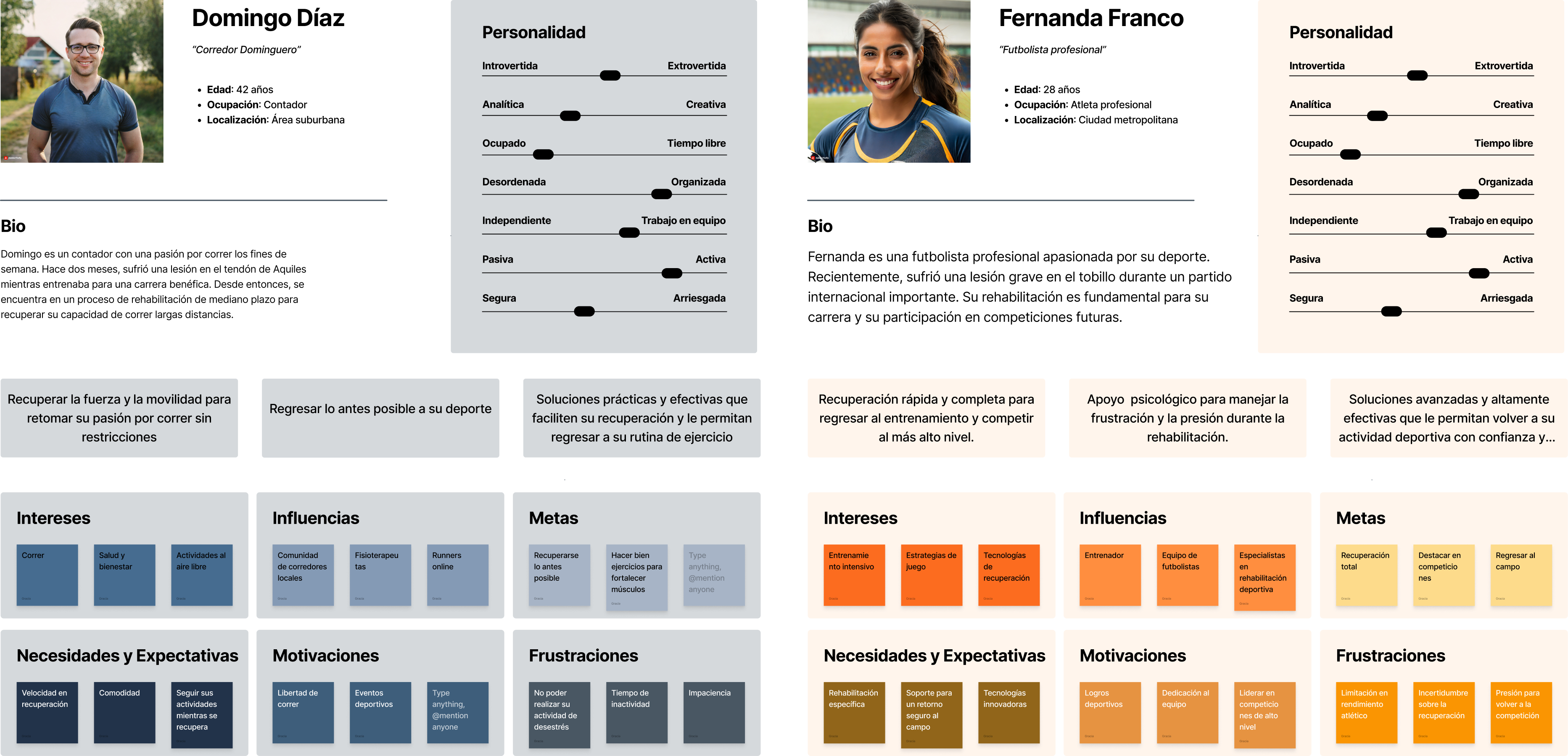
Personas built from interviews with physiotherapists, orthopedists, and athletes
Mapping the path to insight
After identifying target users, we aimed to make the product experience as easy and familiar as possible. We chose to map the path of activating a physiotherapy session, as it was a critical and frequently used function.
Initial testing with the prototype revealed that the existing user experience was unclear, with 75% of users failing to successfully activate the session. This journey mapping highlighted significant pain points, including confusion over the activation process and a lack of intuitive guidance.
To test and validate the map, we conducted usability tests and gathered feedback, which revealed that simplifying the process and adding visual aids, such as colored lights, were essential. This approach personally taught me a valuable lesson: UX principles are not limited to digital products but are crucial in enhancing the overall user experience of physical devices.
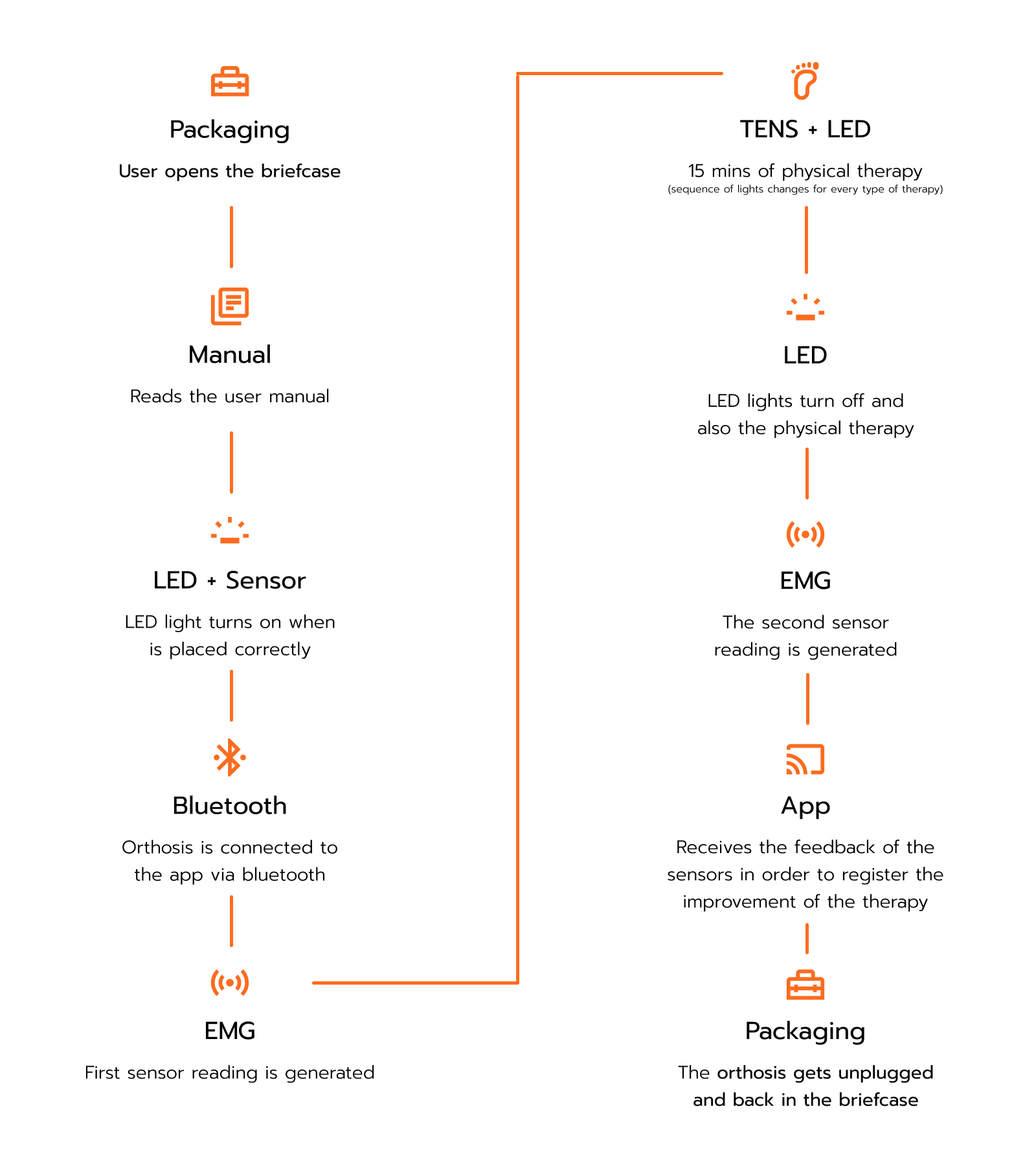
User journey: activating a physiotherapy session with SENZ
A project that expanded my definition of design
Project Management
I was in charge of managing decisions pertaining the pre-incubating program, which made me develop skills such as documentation, organization, and leadership when guiding the team through various stages. I honed my ability to prioritize tasks, maintain clear communication, and adapt to changing circumstances effectively.
Packaging Design & Rendering
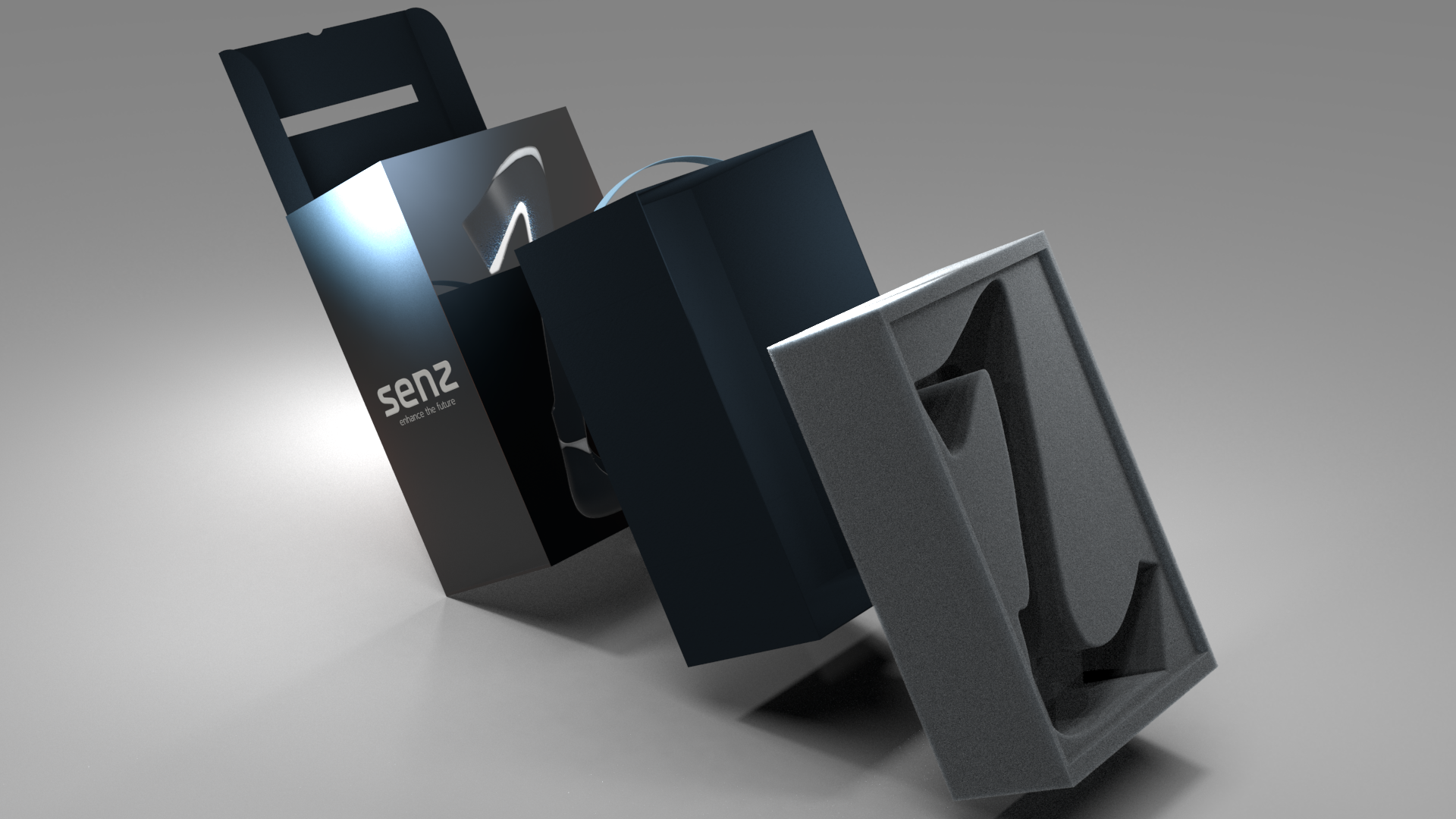
Using tools such as Fusion 360, Illustrator, and Keyshot, I designed and developed the product packaging, ensuring it not only showcased the brand but also enhanced the overall user experience. This required prototyping, mockups, and print production knowledge.