A thesis project that proved design has no boundaries
Created for my university thesis project, VITA was the result of wanting to create a product that showcased my skills in UX design, UI app design, and technological product development. This case study refers to the development and creation of the smart ring.
I acquired new skills such as basic Python programming and HTML to develop a real-time stress sensor, as well as jewelry design and AI chatbot training, all in under 10 weeks. The result was a formal prototype, a real-time stress sensor, and an AI chatbot companion.
Continuous care for people treated as data points
VITA addresses the need for continuous and accessible monitoring for young adults with chronic conditions. Current health solutions often treat individuals as data points rather than whole beings. This leads to fragmented care, particularly for those who need comprehensive and personalized health insights.
VITA combines a smart ring with a mobile application to offer real-time health monitoring and personalized recommendations. This solution fosters an integral approach to health based in human-centered design methodology, addressing both physical and mental well-being by providing users with actionable insights and support.
The system map that changed the product
VITA was initially conceived for women with PCOS. However, the system map revealed that the needs and characteristics of the target market extended beyond PCOS to other chronic conditions. This insight led me to broaden the user base while still addressing the original target, proving an unexpected importance of mapping the system that surrounds your users and products along the design process.
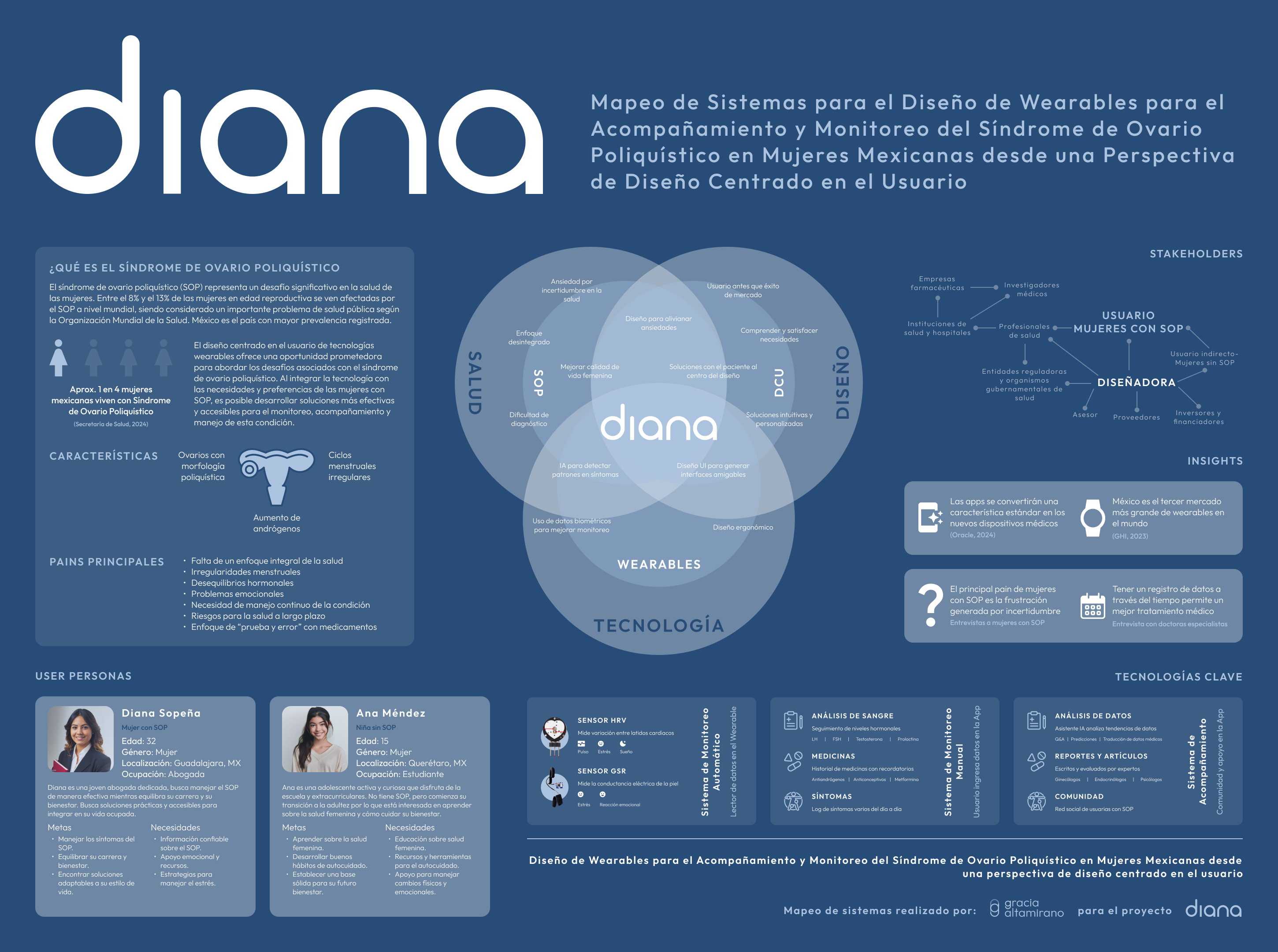
System map: original PCOS focus
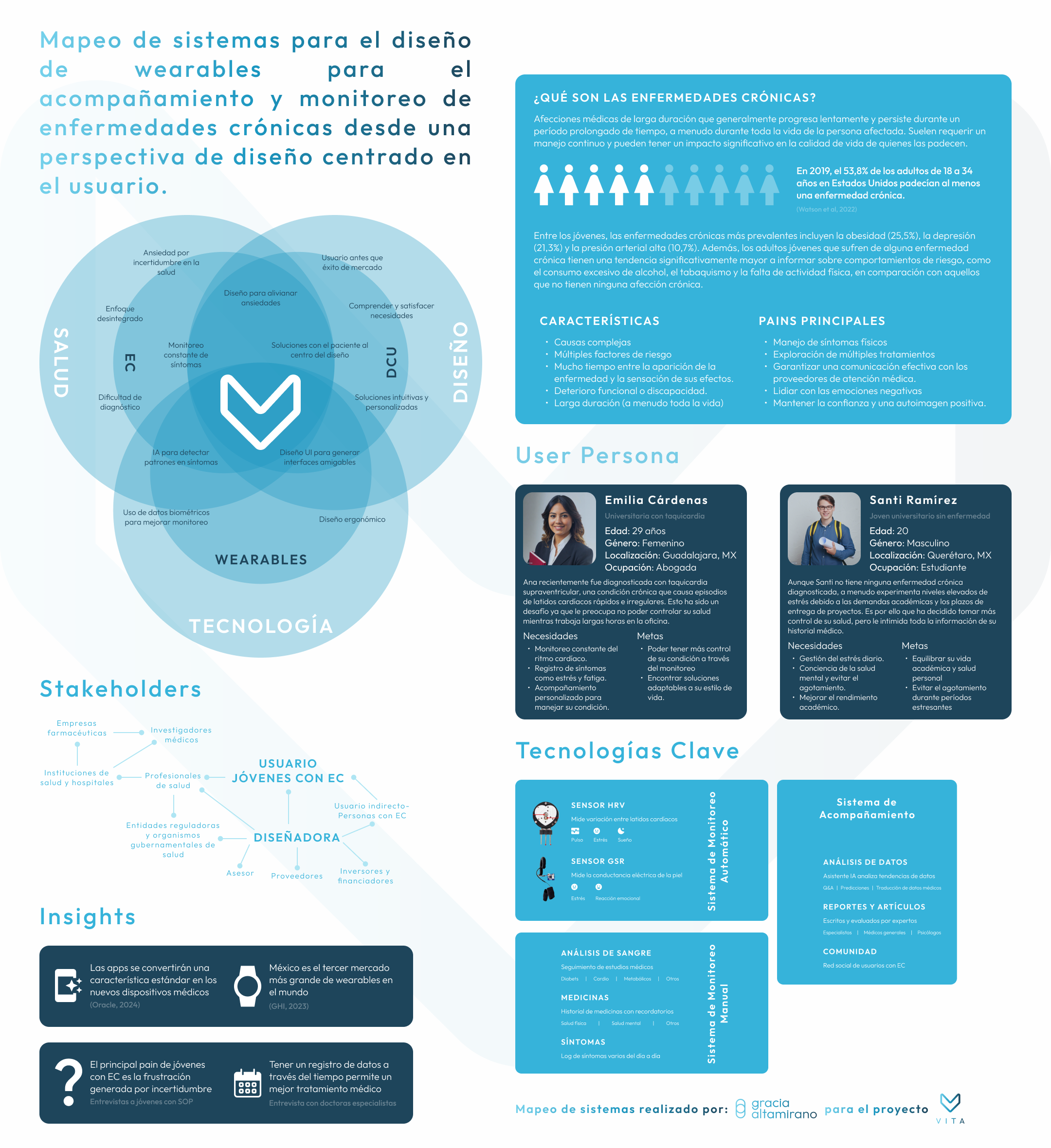
System map: expanded to chronic conditions
Running a 10-week solo sprint
Project management played a pivotal role in this project’s development, where I took on the responsibilities of researching, designing, coding, and implementing both the wearable device and companion app within 10 weeks.
The primary goal was to create a solution for monitoring and supporting young adults with chronic diseases, aimed at enhancing their quality of life and condition management. I defined the project scope, identified potential stakeholders, conducted risk analysis, estimated the budget, and crafted a Gantt chart to outline crucial milestones.
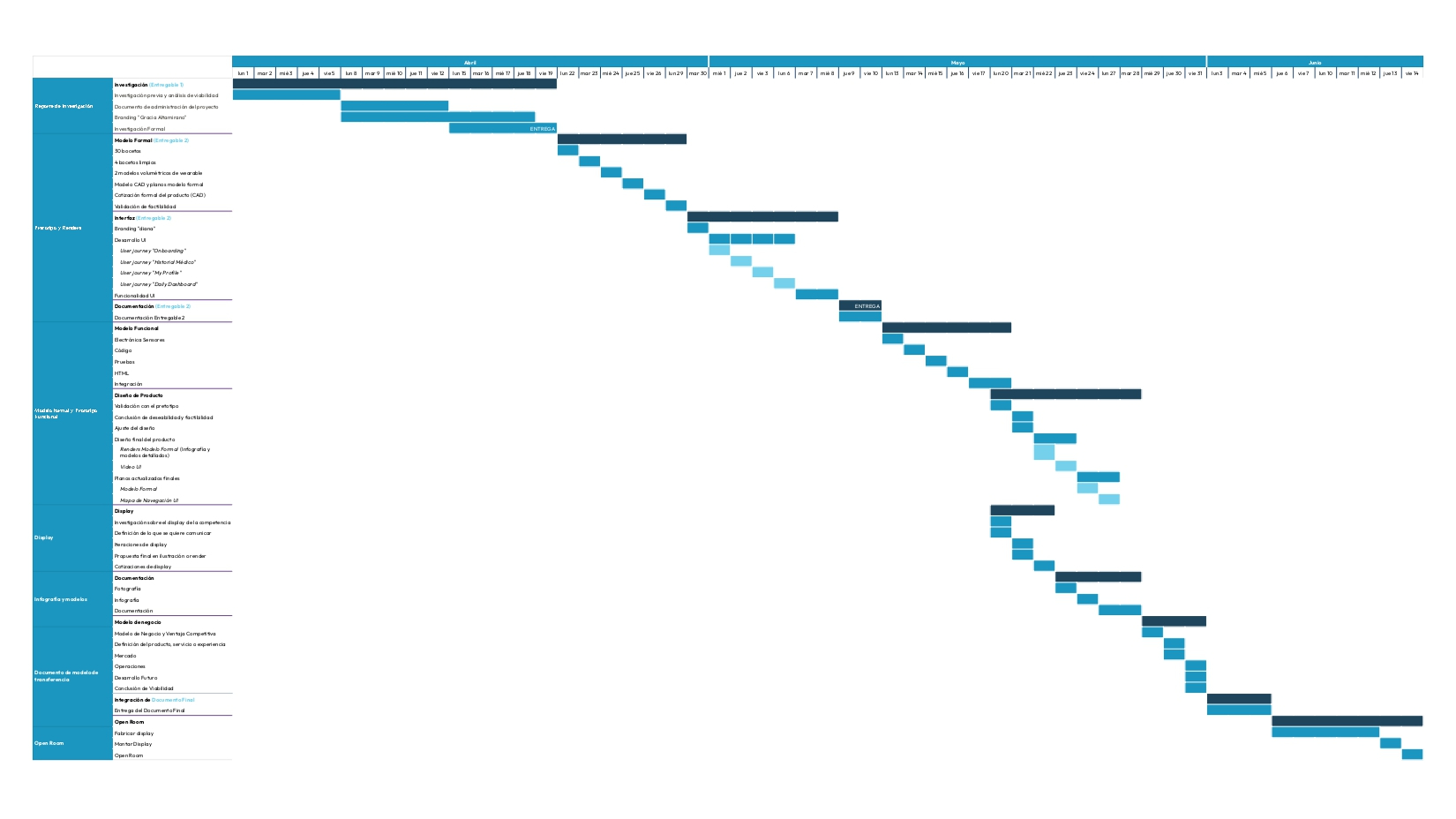
Gantt chart visualizing the project timeline for development
Form and function, found through iteration
I started the design process by creating mood boards to establish the aesthetic direction and block diagrams to explore the functionalities of the ring. After defining the form and function, I progressed to sketching iterations and developing volumetric models and initial drafts of product plans.
Iterative refinement was crucial during this phase, as major design decisions were informed by user surveys and A/B testing, where users selected key features for form and function. This approach ensured that the final product was highly user-centered.
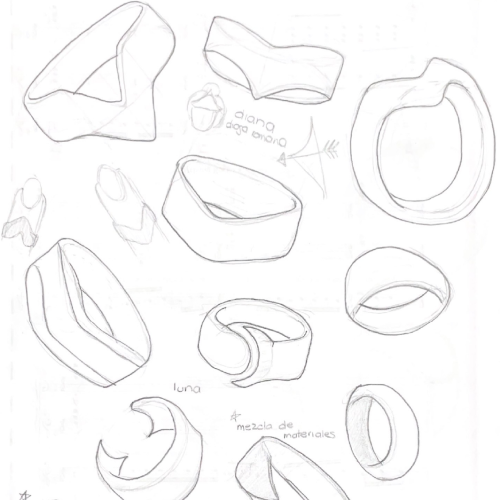
Sketching iterations: exploring ring form and function
From Figma to functioning prototype
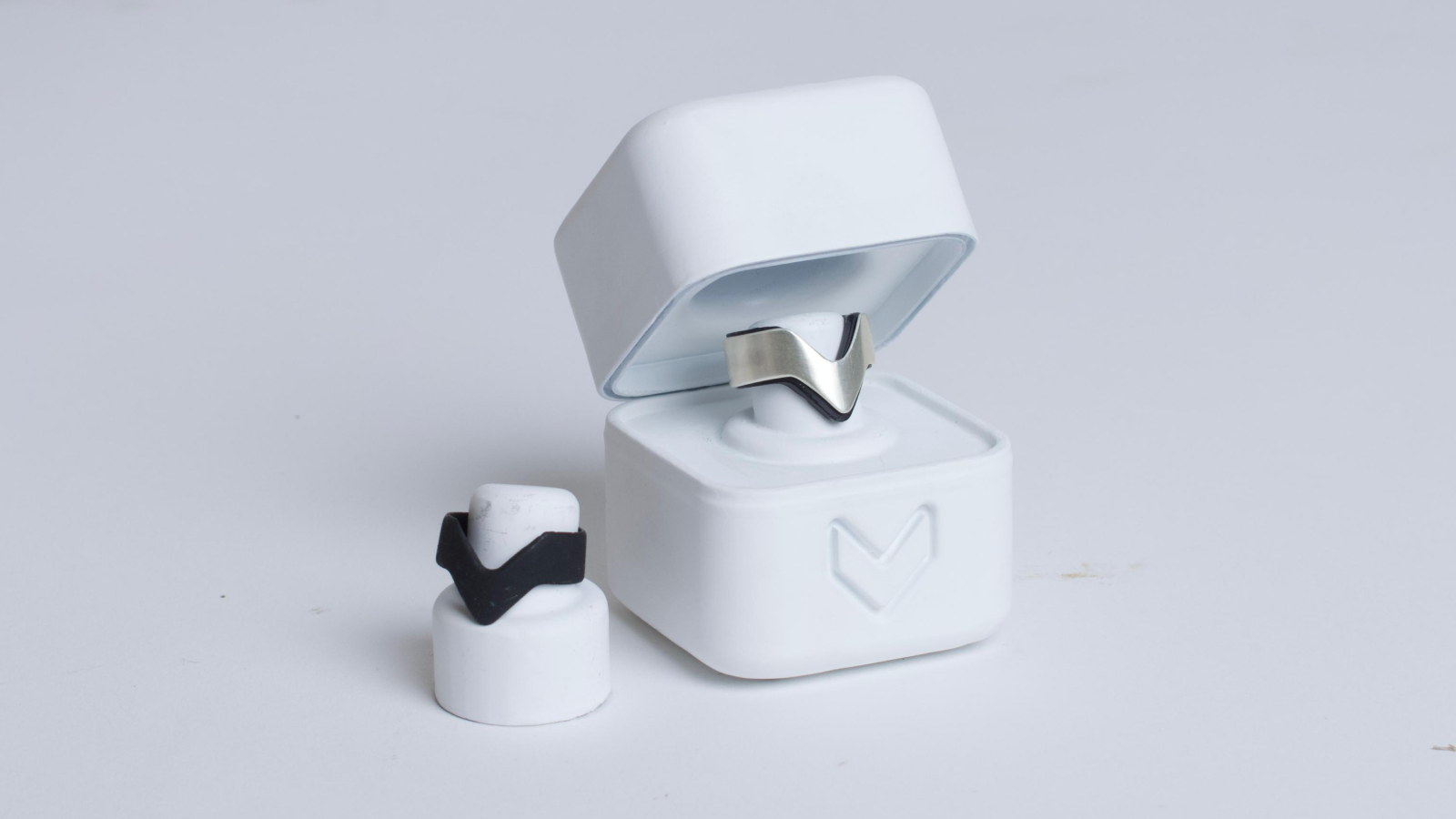
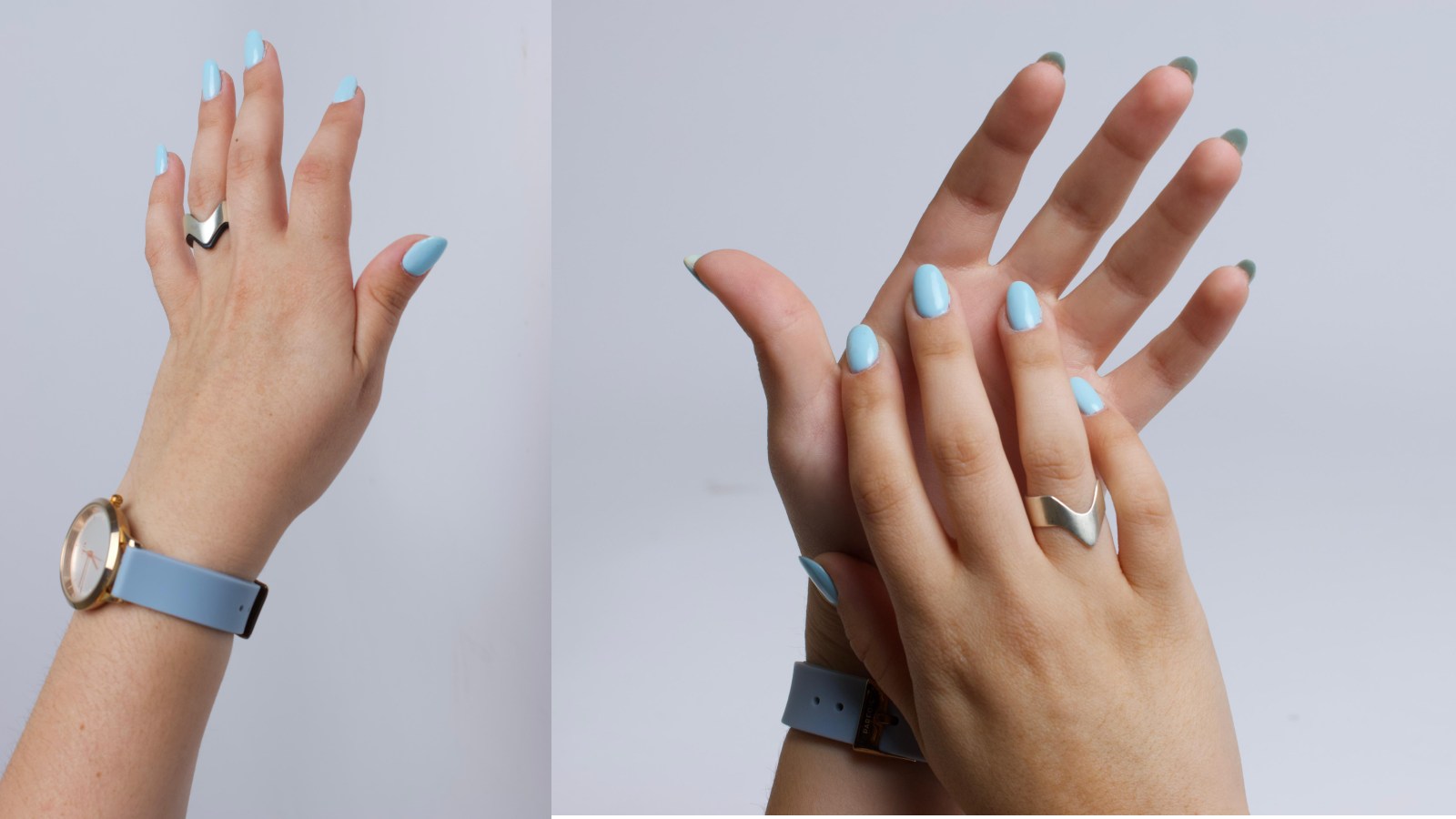
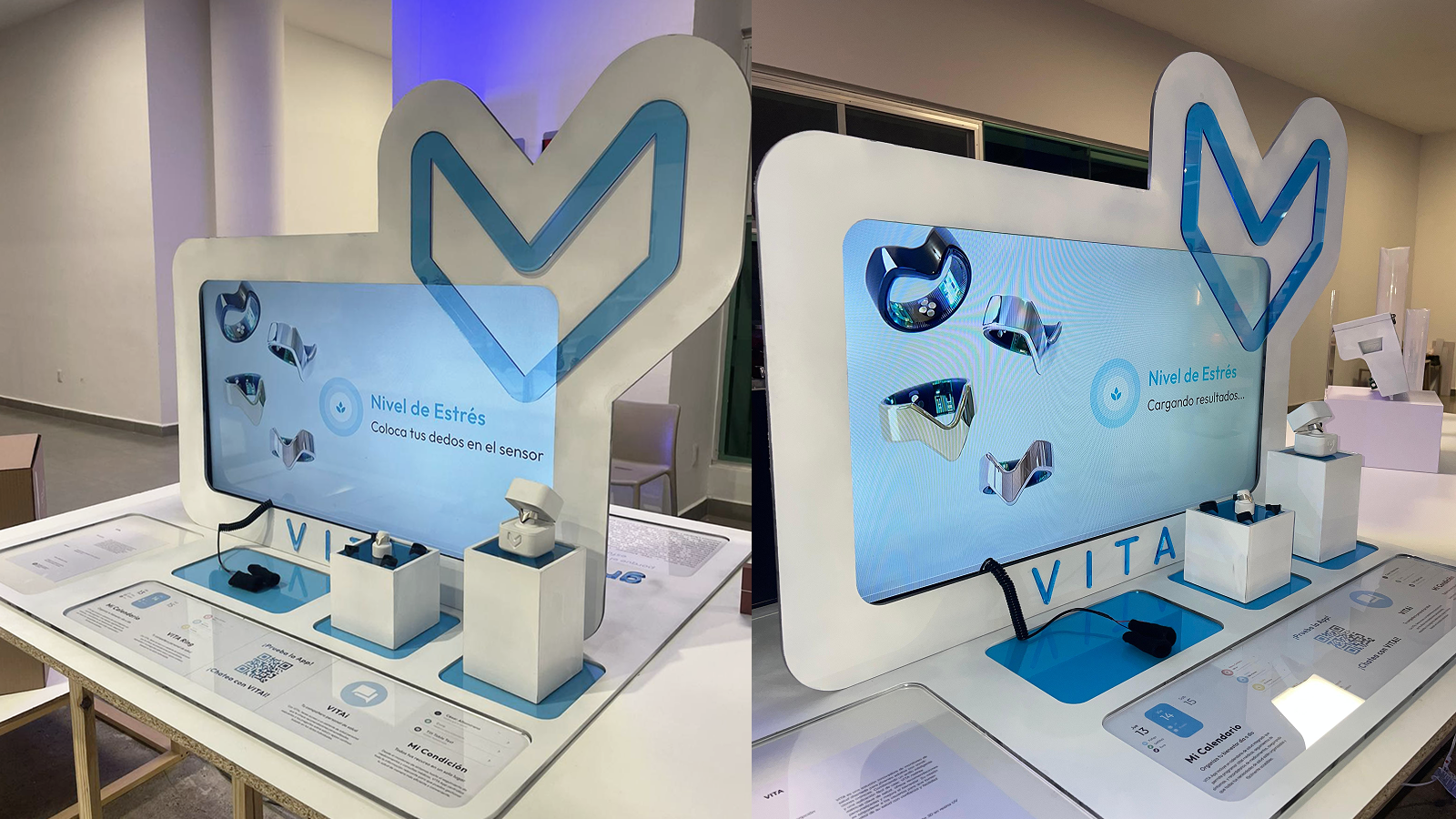
I began creating the VITA Ring prototype using Fusion 360 for design and 3D printing the initial model in resin, followed by custom fabrication in silver. I also built a functional prototype with a stress sensor, utilizing an HTML webpage to display live results from a GSR sensor.
After these initial prototypes, a round of usability testing provided valuable feedback. I additionally decided to make a prototype of the AI model that accompanied the app through a personalized chatbot. This was my first time training an AI model, fed with information about VITA and medical knowledge from official sites.
A complete product ecosystem
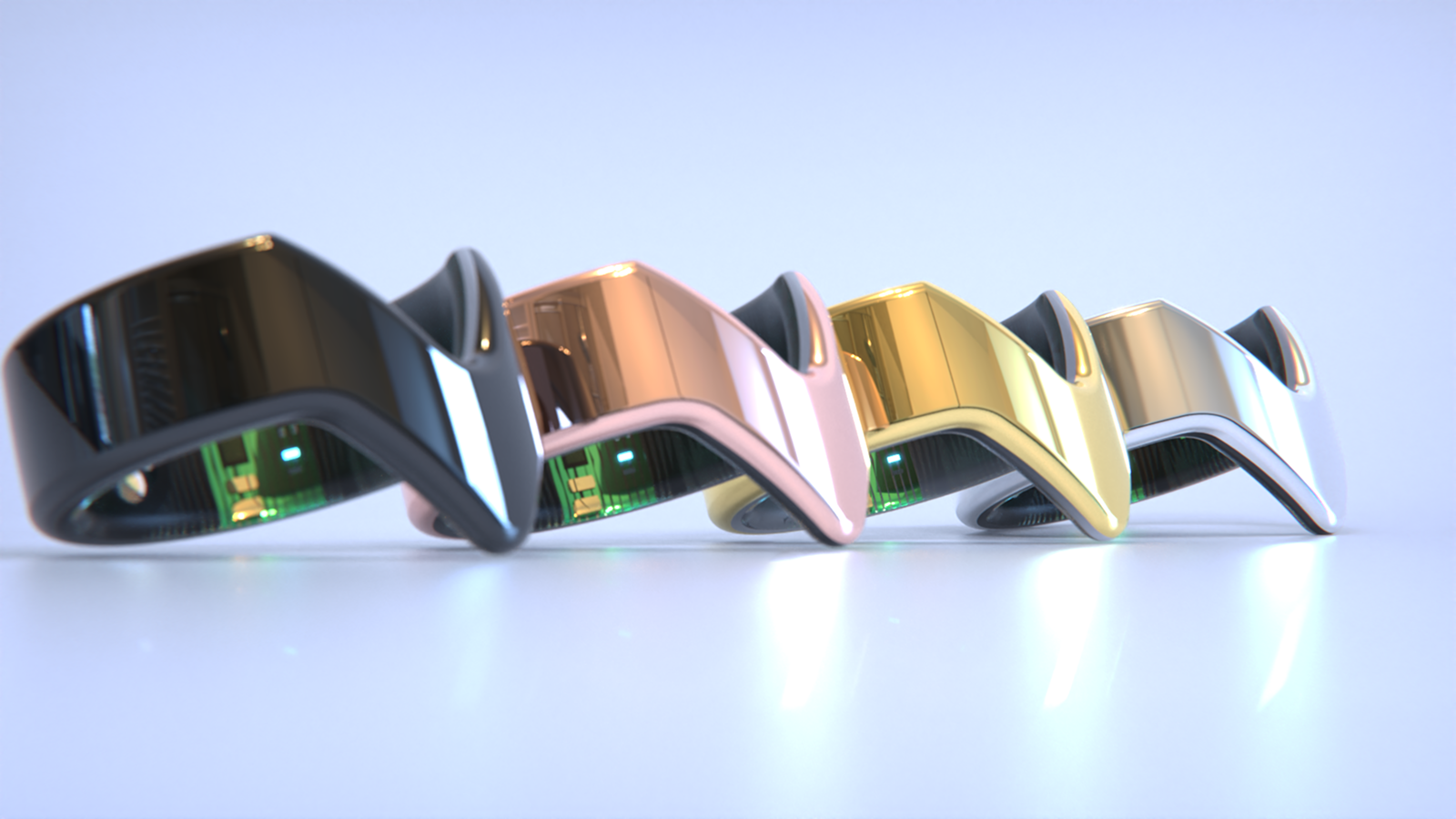
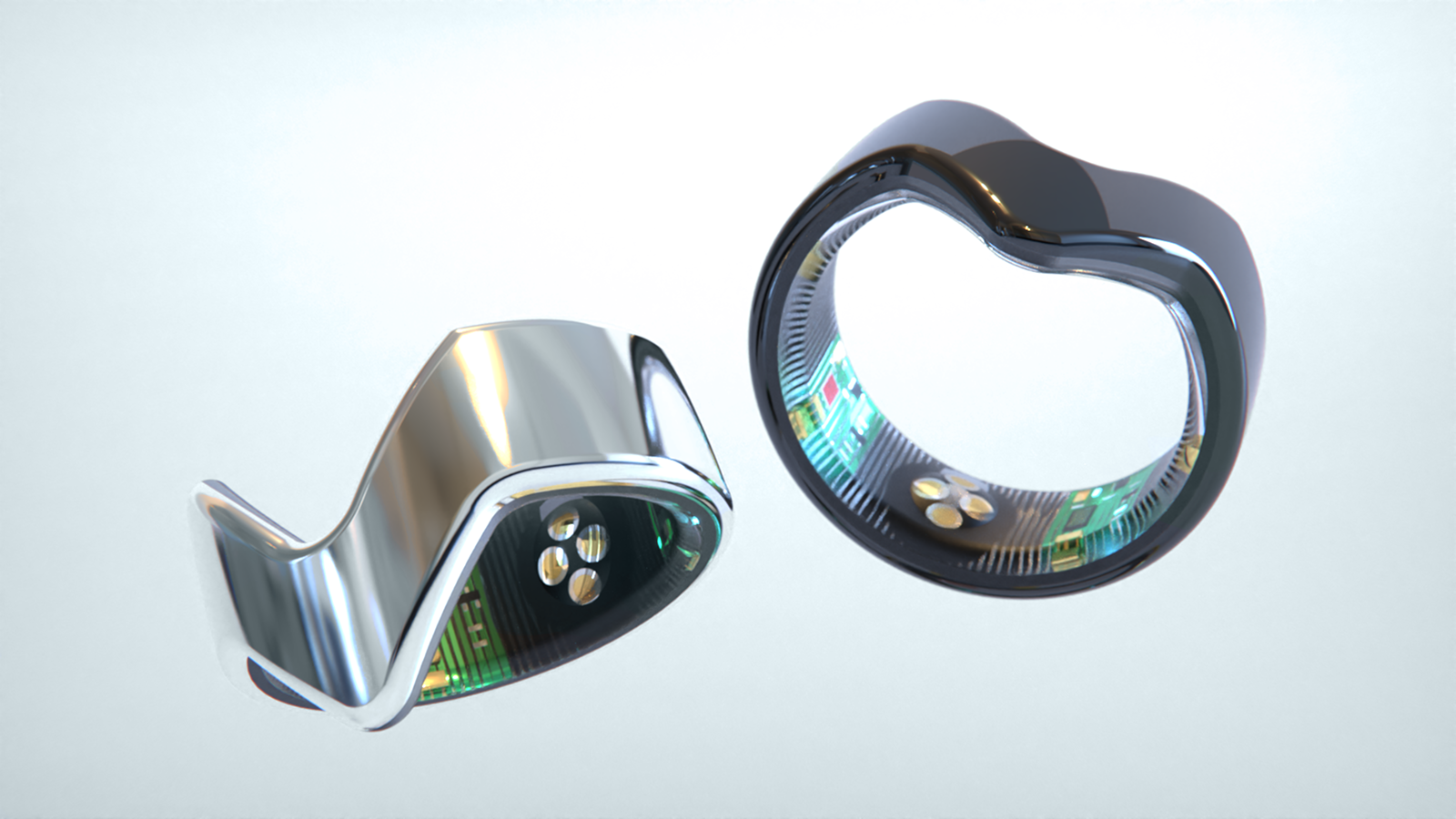
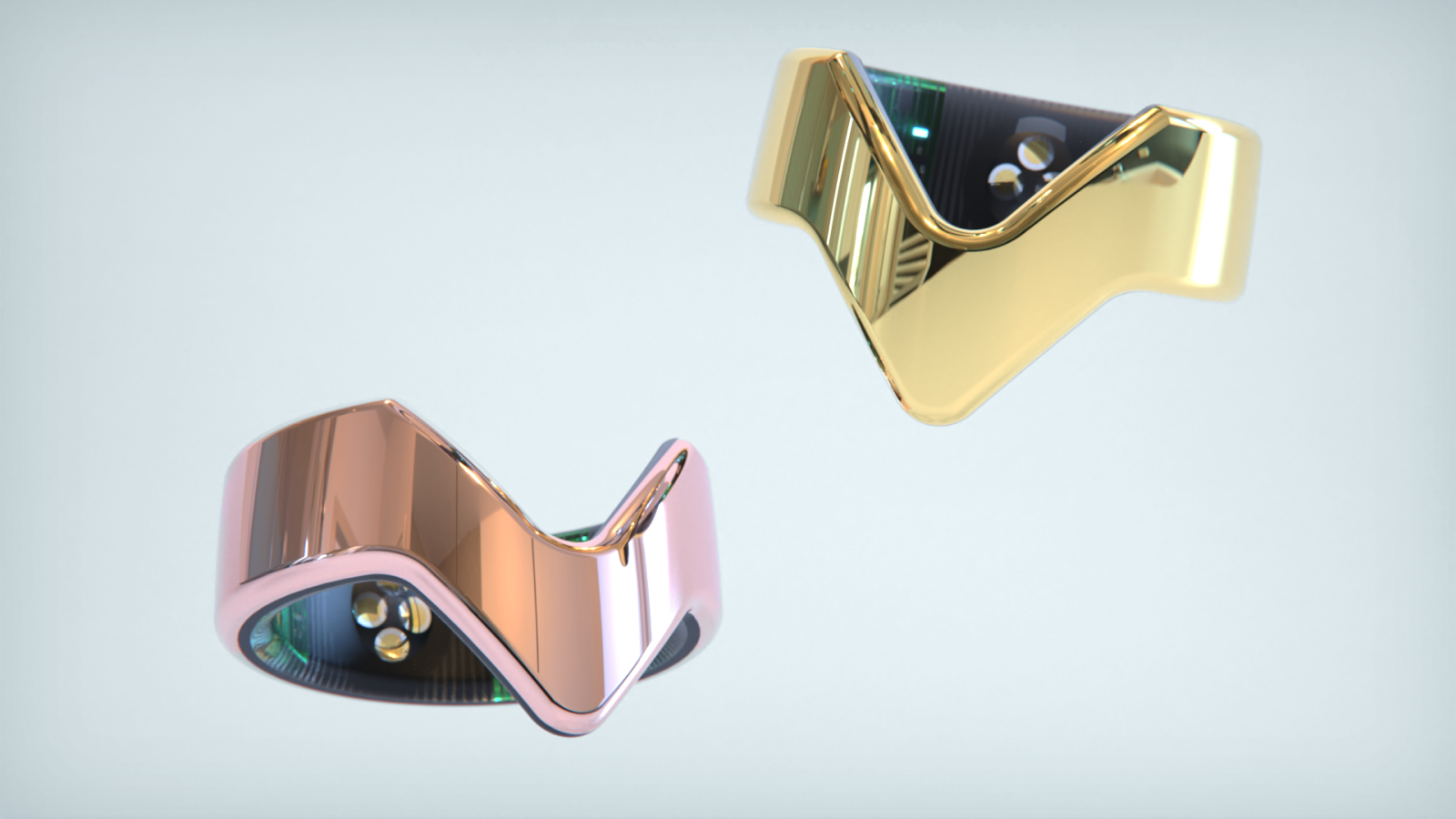
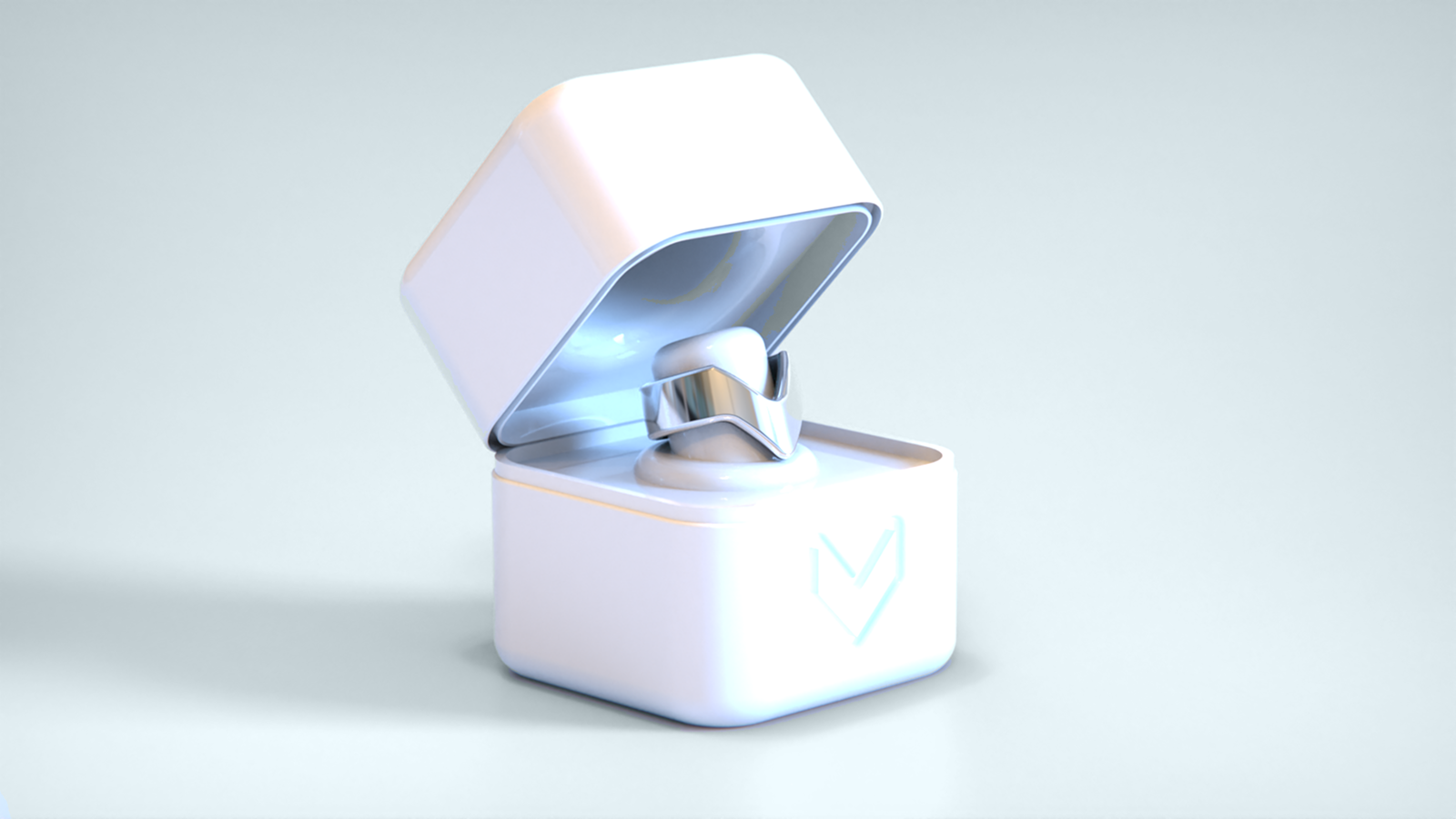
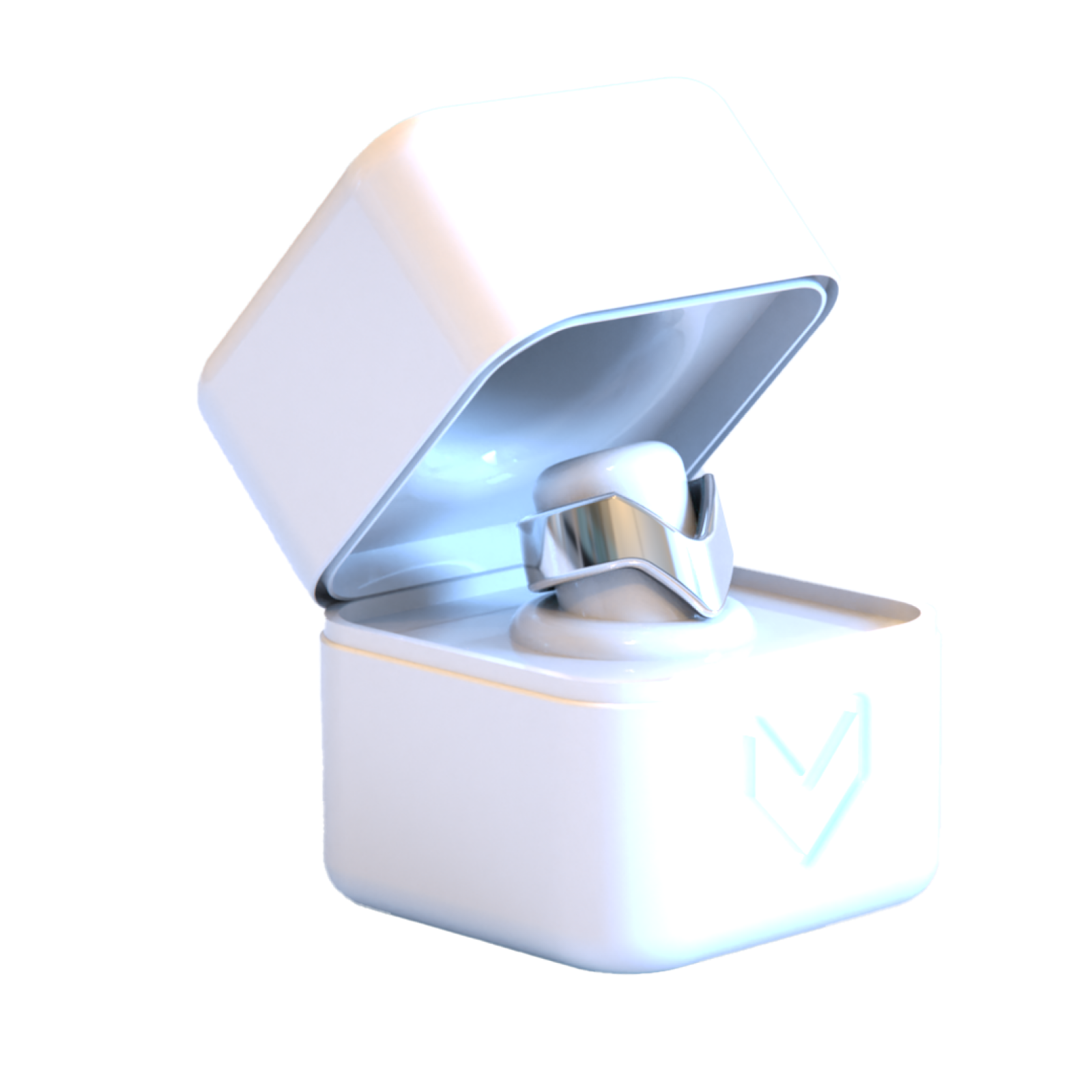
I created realistic product renders to provide users with a clear visual representation of the final design and enhance their understanding of the product. This was complemented by a 1:1 prototype of the ring and its charger, made using resin 3D printing and a silver outer ring.